


When Indian families plan a move to Bangkok, one question comes up almost immediately:
“Which areas are actually affordable for long-term family living?”
Bangkok offers many residential neighbourhoods, but affordability varies sharply depending on rent, transport access, and daily lifestyle costs. Some areas look cheap on paper but become expensive over time due to commuting or convenience costs. Others quietly offer the best balance of low rent, space, and manageable monthly expenses.
This guide breaks down the cheapest areas to live in Bangkok for Indian families in 2026, based on real living costs — not assumptions.
Cheapest Areas in Bangkok for Indian Families – Quick Comparison
| Area | Avg Monthly Rent (2-BHK) | Transport Access | Family Safety | Overall Affordability |
|---|---|---|---|---|
| Ramkhamhaeng | $600 – $950 | Road / Bus | Medium | ⭐⭐⭐⭐⭐ |
| Bang Na | $650 – $1,000 | BTS | Medium–High | ⭐⭐⭐⭐½ |
| On Nut | $800 – $1,200 | BTS | High | ⭐⭐⭐⭐ |
| Phra Khanong | $900 – $1,300 | BTS | High | ⭐⭐⭐½ |
| Outer Lat Phrao | $700 – $1,100 | MRT / Road | Medium | ⭐⭐⭐⭐ |
🔹 Rent ranges are for family-friendly 2-BHK apartments or condos and vary by distance from transport and building age.
Ramkhamhaeng – Lowest Rent, Maximum Space
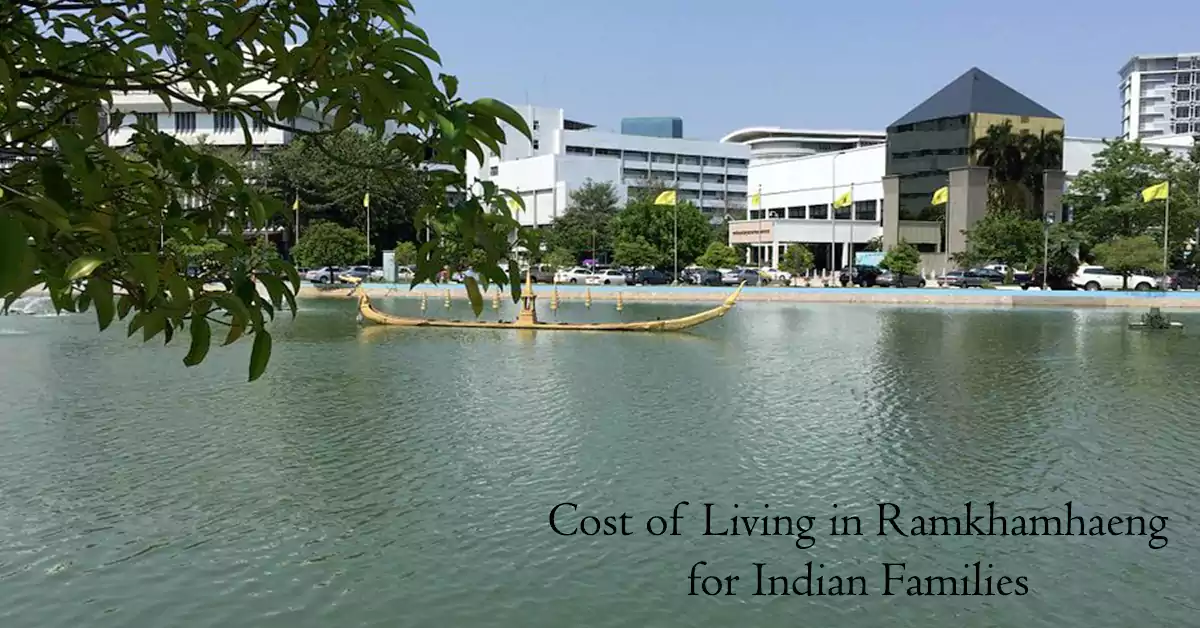
Ramkhamhaeng is often the cheapest viable option for Indian families who want larger homes and predictable expenses.
Why It’s Affordable
- Among the lowest rents in Bangkok
- Larger apartment sizes for the same price
- Minimal lifestyle inflation (fewer malls & nightlife)
Trade-Offs
- Road-based commuting
- Longer travel time to central areas
- Limited Indian grocery access nearby
Best for:
Families prioritise rent savings, space, and long-term stability over daily convenience.
Bang Na – Best Balance of Cost & Connectivity
Bang Na is one of the most popular budget-friendly areas with BTS access, making it ideal for families who still want reasonable transport convenience.
Why Families Choose Bang Na
- Lower rent than central Sukhumvit
- BTS connectivity reduces transport stress
- Larger condos than inner-city areas
Cost Reality
- Slightly higher rent than Ramkhamhaeng
- Fewer Indian restaurants nearby
- Grocery planning required
Best for:
Families who want affordability without completely sacrificing connectivity.
On Nut – Affordable Entry Point to Sukhumvit
On Nut is often the cheapest BTS-connected area within Sukhumvit, making it a strong middle-ground choice.
Why On Nut Still Qualifies as “Affordable”
- Lower rent compared to inner Sukhumvit
- Excellent BTS connectivity
- Safer, residential feel
Cost Watch-Out
- Smaller apartment sizes
- Lifestyle spending can increase over time
Best for:
Families who want city convenience with controlled rent, especially first-time movers.
Phra Khanong – Slightly Higher Cost, Shorter Commutes
Phra Khanong sits closer to central Bangkok and is still relatively affordable compared to premium districts.
Why It Makes the List
- Shorter commute to offices
- Newer buildings available
- Strong transport connectivity
Why It’s Not the Cheapest
- Higher rent than in On Nut and Bang Na
- Lifestyle costs rise naturally
Best for:
Dual-income families where time matters more than rent savings.
Outer Lat Phrao – Quiet, Underrated & Affordable
Lat Phrao (especially the outer sections) is often overlooked but offers good affordability.
What Makes It Affordable
- Moderate rent
- MRT access in some sections
- Quieter residential environment
Limitations
- Location-dependent convenience
- Requires careful housing selection
Best for:
Families are comfortable living slightly away from expat zones.
How can Indian families keep Costs Low in Any Area?
Regardless of location, families who manage costs well usually:
- Choose homes close to transport
- Cook Indian meals at home
- Avoid frequent relocation
- Plan grocery shopping weekly
- Control lifestyle inflation
Area choice matters — but habits matter even more.
Which Area Is the Cheapest Overall?
- Lowest Rent: Ramkhamhaeng
- Best Balance: Bang Na
- Best BTS Value: On Nut
- Best for Time Savings: Phra Khanong
There is no single “perfect” area — only the right area for your priorities.
FAQs: Cheapest Areas to Live in Bangkok for Indian Families (Detailed)
Ramkhamhaeng is widely considered the cheapest livable area in Bangkok for Indian families. It offers significantly lower rent compared to BTS-connected neighborhoods, while providing larger apartments suitable for families. Monthly living expenses remain predictable because lifestyle spending is naturally lower due to fewer malls, nightlife zones, and tourist attractions. Families who are comfortable with road-based commuting and a more local Thai environment often find Ramkhamhaeng ideal for long-term savings. While it lacks premium conveniences, the cost advantage makes it one of the best budget-friendly options for Indian households.
Yes, Bang Na is generally cheaper than On Nut, especially in terms of rent for family-sized apartments. While both areas offer BTS connectivity, Bang Na tends to have larger units at lower prices. On Nut provides better access to central Bangkok and has more lifestyle options, which can increase monthly expenses over time. Indian families choosing Bang Na often prioritise affordability and space, while those choosing On Nut usually value convenience. For long-term savings, Bang Na typically offers better overall cost control.
Yes, most budget-friendly residential areas in Bangkok are safe for Indian families, particularly within gated apartment complexes and condominiums. Areas like Bang Na and Ramkhamhaeng have less nightlife and tourist activity, which reduces noise and crowd-related issues. Many families feel more comfortable in these quieter neighborhoods. While they may not have the polished feel of expat-heavy districts, safety concerns are generally low for daily life. As with any large city, choosing the right building and neighbourhood street matters more than the area name itself.
Not always. While rent is usually lower farther from BTS stations, transport costs and commute time can offset some savings. Families living far from BTS may rely more on taxis or buses, which adds monthly expenses and travel stress. Areas like Bang Na strike a better balance by offering lower rent while still maintaining BTS access. When choosing a budget area, families should calculate total monthly cost, not just rent. Sometimes paying slightly higher rent near transport saves money overall.
Yes, many Indian families live comfortably in Bangkok’s budget areas for several years or more. Comfort depends less on location and more on planning — choosing the right apartment, managing groceries, controlling lifestyle expenses, and planning school commutes early. Budget areas often offer quieter environments, larger living spaces, and predictable expenses, which many families prefer over crowded central districts. Families who adapt to local routines and plan transport effectively often find long-term living in affordable areas less stressful than central Bangkok.
For most Indian families, choosing a cheaper area with more space is usually better than living in a cramped apartment in central Bangkok. Larger homes improve daily comfort, especially for families with children. Central areas offer convenience, but higher rent and lifestyle spending can create long-term financial pressure. Families planning to stay for more than a year often prefer space, stability, and savings over proximity to nightlife or offices. The right choice depends on work location, but for family living, space usually wins.
Ramkhamhaeng and Bang Na are the best areas for long-term savings. Ramkhamhaeng offers the lowest rent and minimal lifestyle spending, while Bang Na balances affordability with better transport access. Over a 3–5 year period, savings from lower rent alone can be substantial. Families who control grocery spending and avoid frequent relocations often save significantly more in these areas compared to central districts. Long-term planning makes these areas financially rewarding.
Not necessarily. In fact, many Indian families report lower stress levels in cheaper areas due to quieter surroundings and reduced financial pressure. While commute times may be longer, daily life is often calmer with less crowding and noise. Financial stability plays a major role in mental comfort, and budget-friendly areas help families avoid constant expense-related anxiety. Stress levels depend more on commute planning and routine management than on the area being “cheap.”
Indian communities are more spread out in budget areas, but families stay connected through schools, temples, grocery hubs, and cultural events. While central Bangkok has a denser Indian presence, families in Bang Na or Ramkhamhaeng often build strong local networks over time. Many Indian families prioritise affordability first and social connections second, using weekends or community gatherings to stay culturally connected.
No, Indian families do not need to avoid central Bangkok entirely. Central areas work well for families with offices nearby or short-term stays. However, for budget-focused households, central Bangkok often leads to higher rent and lifestyle expenses. Many families prefer living slightly outside the city center and commuting rather than stretching their budget. The choice should be based on income stability, work location, and long-term plans rather than convenience alone.
Final Conclusion: Where Should Indian Families Live on a Budget?
For Indian families moving to Bangkok in 2026, affordability doesn’t mean compromising on comfort — it means choosing wisely.
- Families focused on maximum savings should look at Ramkhamhaeng.
- Families seeking connectivity + value will do best in Bang Na.
- Families wanting city access without premium rent should consider On Nut.
The cheapest area is not always the best — but the right affordable area can make long-term life in Bangkok financially stress-free.