

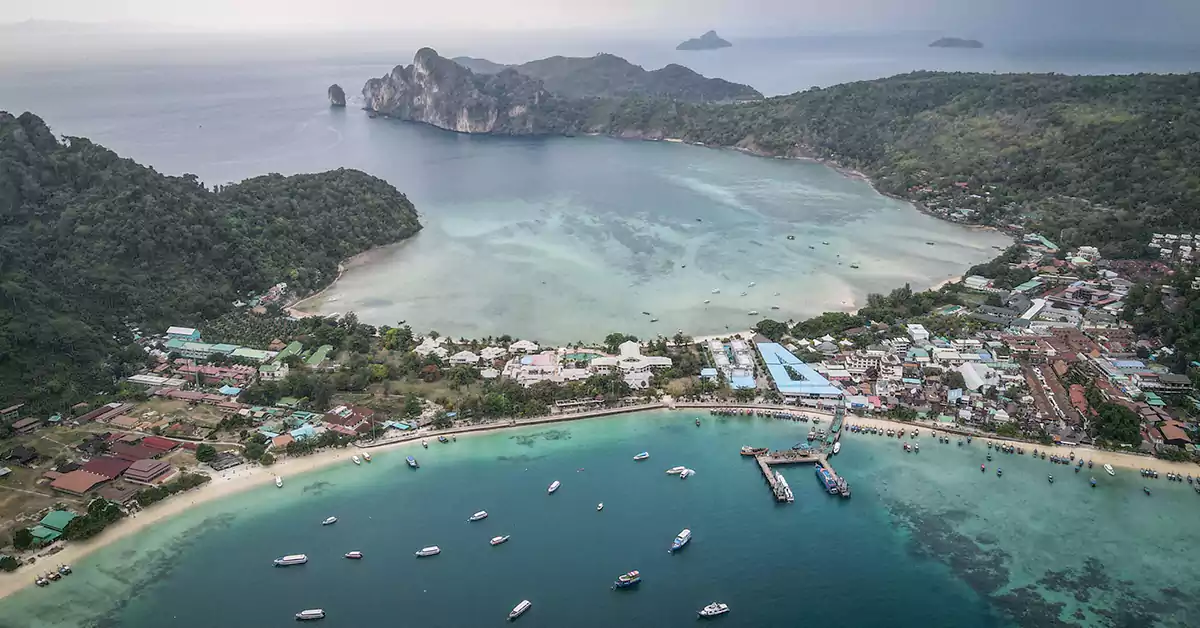
The Phi Phi Islands low season, running roughly from May to October, transforms the region into a quieter, greener, and more budget-friendly destination. It is the opposite of the peak season’s crowded beaches and busy boat terminals. For many travelers who prioritize privacy, savings, and a slow pace, the low season is the best time to visit Phi Phi Islands.
This comprehensive guide of Phi Phi Islands explains the weather expectations, sea conditions, prices, safety, pros and cons, and day-to-day planning strategies for making the most of your low-season trip.
What is the low season in Phi Phi Islands?
The low season corresponds to the southwest monsoon, which brings varying levels of rain, stronger winds, and periodic storms to the Andaman Sea. From a tourism standpoint, this shift dramatically reduces visitor numbers. Hotels lower their rates, tours operate at lower capacity, and the overall atmosphere becomes calmer.
Despite the rain, many travelers enjoy the low season because the islands feel more intimate, the scenery becomes lush, and service providers are more flexible.
Why visit Phi Phi Islands during low season?
1. Much fewer tourists
The most significant benefit of the low season is crowd reduction. Popular spots like Maya Bay, Loh Samah Bay, and the viewpoints are more accessible and significantly less busy.
2. Lower accommodation and tour prices
Hotels, hostels, and resorts reduce prices considerably. Even luxury resorts introduce discounted packages. Long-tail boat tours can also be negotiated at better rates due to decreased demand.
3. Relaxed island atmosphere
With fewer boats arriving from Phuket and Krabi, the village areas feel more laid-back. This is appealing for travelers seeking a peaceful holiday or long stay.
4. Beautiful greenery
Frequent rainfall turns the islands extremely green, making September and October particularly good months for photography.
Low season weather breakdown (May–October)
May
Transitional month as monsoon begins. Weather fluctuates between sunny days and heavy showers. Early May often remains fairly stable.
June
More consistent rainfall begins, but showers often come in short bursts. Lower crowds make June a good budget-friendly month.
July
Regular rain with sunny periods in between. Landscape becomes lush. A favorable month for travelers who want quiet beaches.
August
Similar to July but slightly wetter. Sea conditions vary; some exposed areas may be unsafe on certain days. Still among the quietest months.
September
One of the wettest months. Highest risk of ferry disruptions. Very quiet — perfect for solitude seekers.
October
Rain continues but begins to reduce toward the end of the month. Crowds remain low.
Sea conditions in low season
The sea is the most unpredictable element during the monsoon months. You can expect:
- Occasional rough seas
- Suspension of ferry services during storms
- Reduced visibility for diving
- Limited access to some outer bays
- Operators focusing tours on sheltered areas
When the seas are calm, boat trips can still be enjoyable. It’s important to stay aware of local weather advisories and to choose well-reviewed operators.
Prices during low season
Low season is the best time for budget travelers. Expect:
- 30–60% lower hotel rates
- Better negotiation power for long-tail tours
- Promotional dining and activity packages
- Cheaper ferries on certain routes
Even high-end hotels often run promotions in September and October.
Pros and cons of low season
Pros
- Fewer tourists everywhere
- Considerably lower prices
- Quiet beaches and viewpoints
- More relaxed interactions with locals
- Lush, green landscapes
Cons
- Higher chance of rain
- Rough sea conditions
- Less predictable boat schedules
- Lower visibility for diving
- Some bars or shops may close temporarily
Safety tips for monsoon travel
- Monitor daily weather forecasts
- Avoid small boats during rough conditions
- Use reputable ferry companies
- Wear non-slip footwear for trails
- Carry waterproof bags
- Avoid swimming on beaches with strong currents
- Purchase travel insurance covering cancellations
What to pack for low season
- Lightweight rain jackets
- Quick-dry clothing
- Waterproof phone cases
- Anti-slip footwear
- Dry bags
- Motion sickness tablets
- Sunscreen (even in monsoon UV can be high)
Best areas to stay during low season
1. Tonsai or Loh Dalum (Central areas)
Ideal for first-time visitors who want easy access to shops, restaurants, and tours.
2. Long Beach
Quieter than the center; good for couples.
3. Laem Tong Beach
More secluded, ideal for travelers seeking total relaxation and private beaches.
Best activities during low season
Despite the weather, many activities are available:
- Kayaking in sheltered areas
- Hiking to viewpoints during dry periods
- Exploring Tonsai Village
- Spa treatments and wellness days
- Cooking classes
- Photography after rain
- Local boat trips when seas are safe
Some dive operators run throughout the monsoon but tailor routes based on conditions.
How many days to stay?
A minimum of 2–3 nights is recommended. Weather may delay activities, so a longer stay helps you fit in excursions during calm periods.
Who should visit Phi Phi in low season?
Good for:
- Couples seeking privacy
- Solo travelers wanting quiet surroundings
- Budget travelers
- Photographers
- Digital nomads or long-stay visitors
Not ideal for:
- Short itineraries with tight schedules
- Travelers expecting perfect snorkeling visibility
- Visitors uncomfortable with unpredictability
Final verdict: Is low season worth it?
Yes, the low season is worth visiting if you prioritize fewer crowds, lower prices, and a relaxed pace over perfect weather. Although rain and occasional sea disruptions occur, many travelers find the experience more authentic and comfortable compared to the busy dry months. For the quietest experience, September and October stand out. For a balance of weather and crowd reduction, May and early November are excellent.