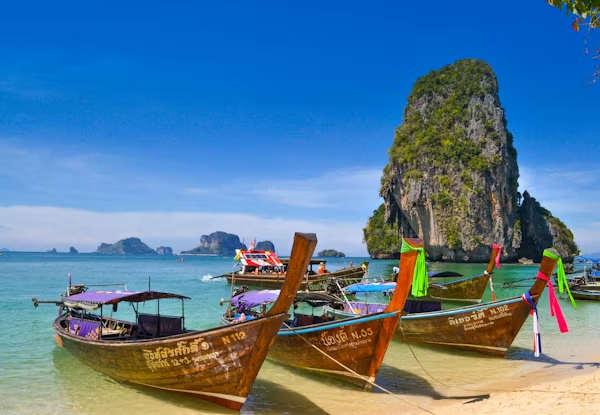


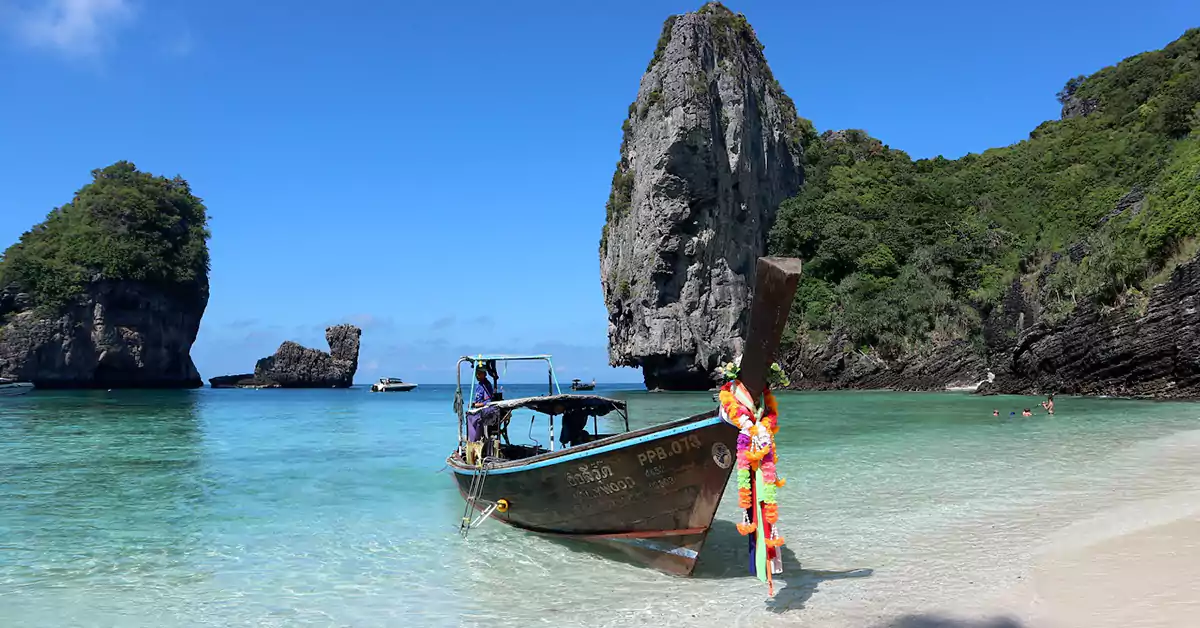
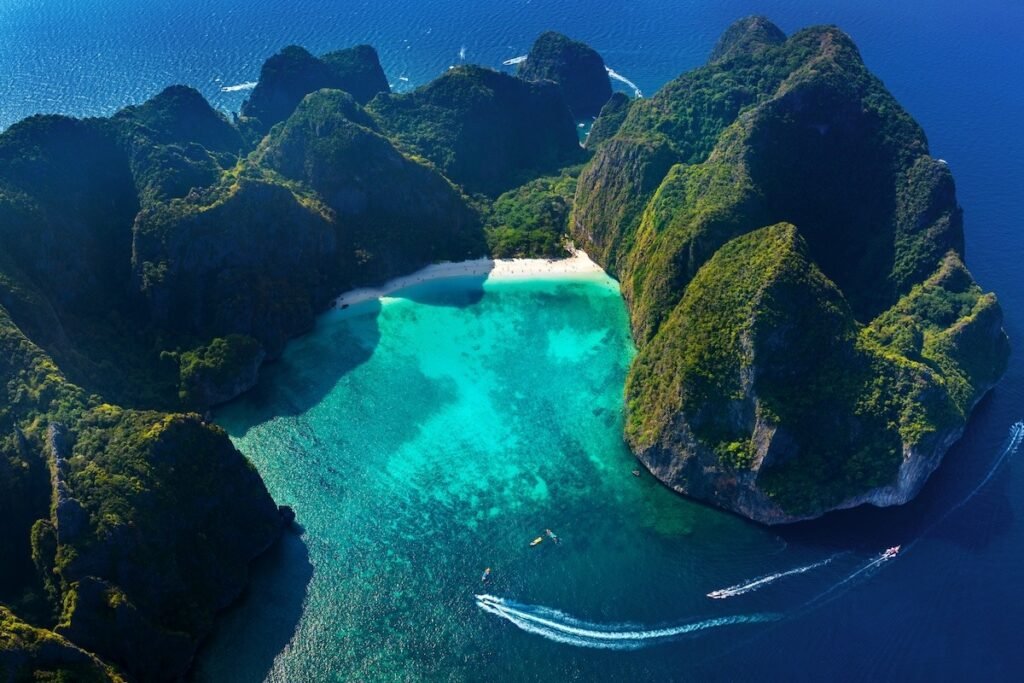
The Phi Phi Islands are some of Thailand’s most photographed and visited islands. White sand beaches, sheer limestone cliffs, and clear blue water draw visitors from around the world. That popularity also creates heavy crowds during peak months, which can be a problem if you are looking for a quiet, relaxed visit. This guide explains the best time to visit Phi Phi Islands to avoid crowds, the trade-offs of traveling during low season, the month-by-month weather and crowd breakdown, and practical tips for planning a peaceful, safe trip.
Quick answer: when to go for the quietest experience
If your priority is fewer tourists and lower prices, aim for September and October, followed by June to August as quiet months with more rain. If you want a compromise of good weather with fewer crowds than peak season, consider the shoulder months May and November. The popular dry season runs November to April, which is the busiest time for visitors.
Why timing matters: crowds, costs and experience
Choosing when to visit Phi Phi Islands dramatically affects your trip experience:
- Crowd levels: Peak season brings high numbers of day-trippers and package tourists. Beaches, viewpoints and boat tours can become congested.
- Costs: Accommodation, transfers and tours are most expensive in the dry season. Low season frequently brings markdowns and last-minute deals.
- Weather and sea conditions: Calm seas and clear water make snorkeling/diving best in the dry season. Low-season rain and rougher seas can disrupt boat services.
- Accessibility of attractions: Protected areas and seasonal rules (for example around Maya Bay) can change access and visitor behavior.
If your main goal is a crowd-free trip, the “best time to visit Phi Phi Islands to avoid crowds” will usually fall in the monsoon/low season window, where the payoff is privacy and lower prices in exchange for occasional rain and less predictable sea conditions.
Season definitions and what they mean
- High (dry) season — November to April: Sunshine, calm seas, ideal snorkeling and diving. Highest visitor numbers and prices.
- Shoulder season — May and November: Transitional months with mixed weather but fewer crowds than peak. Good compromise months.
- Low (monsoon) season — May/June to October: Increased rainfall, rougher seas at times, but substantially fewer tourists and lower prices. Many businesses offer discounts.
The quietest months — detailed explanation
September and October
September and October consistently register the lowest number of visitors to the Phi Phi Islands. Rainfall can be significant in September, making it the wettest month for much of the Andaman Sea coast, but the islands are extremely quiet. If your priority is to avoid crowds for photography, long beach walks, or simply solitude, these months deliver the quietest experience. Be prepared for occasional cancellations of day trips due to weather, and keep flexible plans.
June to August
June, July and August are also quiet relative to the dry season. Rain frequency increases compared to May, but showers are often short and interspersed with sunny breaks. Many travelers who don’t mind a higher chance of rain choose these months for better hotel deals and much quieter beaches. July is often highlighted for its lush green landscapes and serene vantage points.
Best compromise months
If you want fewer tourists but still reasonably good weather, try May (late May before monsoon fully sets in) or November (right as the dry season returns). Both months typically have fewer visitors than December–February but more favorable sea conditions than peak monsoon months. They are ideal if your priority is both weather and reduced crowds.
Month-by-month guide (crowds, weather, what to expect)
This section is written to help you pick specific travel dates and to plan activities around realistic conditions.
January – March: Peak, very busy
- Crowds: Very high (especially around New Year and school holiday periods).
- Weather: Dry, sunny, the best visibility for snorkeling/diving.
- Why go: Best conditions for sea activities and hiking with minimal rain, but expect crowded viewpoints and higher prices.
April: Peak moving toward shoulder
- Crowds: Still heavy, especially early April.
- Weather: Hot and getting wetter toward the end of the month; occasional short storms appear late April.
- Why go: If you travel early April, you still enjoy good diving conditions though temperatures rise.
May: Shoulder season — fewer crowds
- Crowds: Lower than peak, increasing deals start to appear.
- Weather: Start of the monsoon for many west-coast islands; rain increases but is often intermittent.
- Why go: Good compromise for crowd avoidance with still acceptable weather in early May.
June – August: Low season, quiet and green
- Crowds: Low.
- Weather: Regular showers, rougher seas possible. Many days still have bright, sunny windows for activities.
- Why go: Quiet beaches and low rates. Great for travelers prioritizing solitude over perfect dive visibility.
September – October: Quietest months
- Crowds: Lowest of the year.
- Weather: Wettest month(s), with frequent heavy showers and occasional stormy seas. Ferry cancellations possible.
- Why go: Best for photographers, solo travelers and anyone seeking empty beaches. Bring flexibility and travel insurance.
November: Shoulder into dry season
- Crowds: Increasing but quieter than peak months; good deals often still available early in the month.
- Weather: Rain decreases; seas calm.
- Why go: One of the top choices for fewer tourists and good sea conditions. Late November is close to optimal.
December: Start of high season
- Crowds: Rising fast through December, peaking around Christmas and New Year.
- Weather: Generally dry and sunny.
- Why go: Excellent sea and diving conditions, but expect higher prices and crowds.
Practical planning advice for low-season travel
If you choose the quiet season to avoid crowds, follow these practical tips to ensure a smooth trip.
1. Prioritize flexible bookings
Arrange refundable or flexible hotel and ferry bookings when possible. Many operators offer last-minute discounts, but weather-related cancellations are more likely in low season, so buy flexible tickets or insurance.
2. Choose reliable ferry and tour operators
During rougher sea conditions, safety becomes the top priority. Use reputable ferry companies and book boat trips with operators who provide clear weather contingency policies. Read recent reviews before booking.
3. Stay longer than a single day
One-day itineraries are popular but vulnerable to cancellations in the monsoon. For a relaxed experience during the quiet season, plan to stay at least two to three nights so you have buffer days if a boat trip is postponed.
4. Pack appropriate gear
Pack lightweight rain protection, quick-dry clothing and waterproof bags for electronics. Bring medication for motion sickness if you are sensitive to rougher seas.
5. Consider island choice and accommodation
Phi Phi Don is the main inhabited island with the best range of accommodation and services. If bad weather forces you off scheduled tours, staying on Phi Phi Don gives you more options than outlying islets. Look for hotels that refund or rebook easily.
Activities that work well during quieter months
Even in low season, the Phi Phi Islands offer plenty to do. Many travelers report a more authentic and relaxed island experience outside peak months.
- Hiking to viewpoints: With fewer people, viewpoints and trails feel private. Early mornings after rain often produce dramatic skies for photography.
- Long-tail boat exploration: Private or semi-private long-tail excursions can be negotiated for good value; some operators run smaller tours away from daytime crowds.
- Kayaking and beach exploration: Calm days in low season are great for kayaking in sheltered bays.
- Local dining and village life: With fewer day-trippers, dining at local restaurants and exploring Ton Sai’s shops feels less rushed.
- Diving: While visibility can be reduced in monsoon months, diving is still possible and can be rewarding for macro photography and different marine behavior. Always check local dive center conditions.
Safety and environmental considerations
Sea safety
The Andaman Sea can become rough during monsoon months. Operators cancel or reschedule tours when sea conditions are unsafe; respect those decisions. Avoid taking small boats during storm warnings.
Environmental protection
Maya Bay and other sensitive sites have had access restrictions in recent years due to overtourism and environmental damage. Always follow national park rules, avoid littering, and use reef-safe sunscreen when snorkeling or diving.
FAQs
A: September and October are generally the quietest months with the fewest tourists, but they also have the highest rainfall risk.
A: Yes—low season offers empty beaches, lower prices and a more relaxed atmosphere. Expect more rain and possibly rougher sea conditions.
A: Snorkeling is possible on calmer days, but visibility can be reduced. For best underwater visibility, travel in the dry season (November–April).
A: You can often find very good last-minute rates in low season, but if you are traveling during a holiday weekend or want specific accommodation, booking in advance is safer.\